DIANA WOLFE, VP, HEAD OF AI RESEARCH AND STRATEGY, KYNDRYL

Diana Wolfe, Kyndryl
Diana Wolfe discusses the challenges organisations face in turning AI investment into measurable business value, highlighting the importance of defining clear objectives, understanding implementation and verification costs, and preparing workforces for change. She explains that successful AI adoption requires more than giving employees access to new tools. Organisations must be willing to redesign roles and processes, break down traditional silos and respond to the friction that emerges as employees discover new ways of working.
The conversation also explores the importance of human judgement, accountability and trust as AI becomes increasingly involved in business-critical decisions. Diana emphasises that organisations must understand their starting point, measure AI’s impact and ensure that automation does not undermine expertise or resilience. She argues that leaders remain responsible for shaping their organisations as AI transforms how decisions are made and work gets done.
LEE MCNABB, HEAD OF DIGITAL ASSETS, NATWEST GROUP, NATWEST
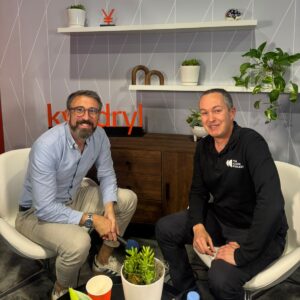
Lee McNabb, Natwest
Lee McNabb discusses the growing momentum behind tokenisation in financial services, highlighting how recent live tokenised deposit transactions are demonstrating its potential to deliver real value. He explains that banks must develop the capabilities to support digital assets while balancing innovation with operational resilience, compliance and financial crime prevention. He also emphasises the importance of collaboration between banks, central banks and regulators in establishing the legal frameworks and safeguards needed to support adoption.
The conversation also explores the future of agentic payments and commerce, with Lee highlighting the need for transparency, customer choice, safety and control as AI-driven transactions develop. He argues that scaling these technologies successfully requires more than technical innovation, with clear principles and regulatory protocols essential to building trust. Looking ahead to 2030, he expects to see more tangible use cases for digital assets across both financial infrastructure and customer-facing banking services.
TYLER DERR, CTO, BROADRIDGE

Tyler Derr, Broadridge
Tyler Derr explains how Broadridge is modernising its financial services infrastructure while maintaining mission-critical operations for major institutions. He outlines the company’s platform approach, which brings data into a common structure and builds a services layer that supports innovation, including the integration of tokenised assets. He highlights the value of managing traditional and tokenised securities through a shared control framework, allowing financial institutions to maintain consistent operational controls, governance and audit processes.
The conversation also explores the practical application of agentic AI in financial services. Tyler highlights how Broadridge is moving beyond experimentation by embedding AI into its managed services operations, with contractual commitments to reduce client costs. Looking ahead, he predicts that autonomous AI will become commonplace, shifting the industry’s focus towards open architecture, well-defined APIs and platforms that enable clients to build and innovate alongside technology providers.
ANDRÉ REZENDE, CORPORATE CTO, CREDICORP
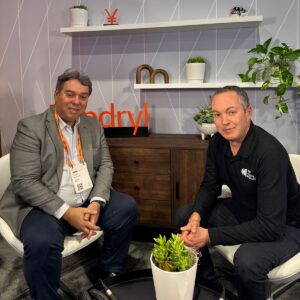
André Rezende, Credicorp
André Rezende outlines Credicorp’s technology transformation, which includes standardising systems and tools across its businesses, creating shared services and modernising legacy core systems. He explains how the group balances innovation with stability by setting clear target architectures and delivering changes in smaller, measurable stages rather than relying on large-scale system overhauls. With more than 200 AI use cases already in production, he highlights the importance of assessing potential projects objectively, balancing business opportunities against practical implementation challenges and risk.
The conversation also examines the technical and cultural barriers to wider AI adoption, with André identifying stakeholder alignment and organisational willingness to change as the most difficult challenges. Looking ahead, he expects context engineering and workforce skills to become increasingly important, arguing that AI success depends on giving systems the right context and developing employees who can orchestrate AI agents effectively. He also highlights Credicorp’s investment in internal academies to help people adapt to new ways of working.
SOPHIE MARNHIER-FOY, VP PRODUCT STRATEGY, HEAD OF DIGITAL ASSET SOLUTIONS, CAPITAL MARKETS TECHNOLOGY, NASDAQ

Sophie Marnhier-Foy. Nasdaq
Sophie Marnhier-Foy outlines how Nasdaq’s Calypso platform is evolving from a trusted system of record into an intelligent platform that supports digital assets, tokenised collateral and AI-driven capabilities. She explains how the introduction of an agentic AI layer aims to improve efficiency across capital markets and treasury operations, helping banks and other financial institutions make better use of their data while maintaining the reliability required for mission-critical systems.
The conversation explores the importance of trust, governance and human oversight as agentic AI becomes more integrated into financial services. Sophie describes the progression from knowledge agents that retrieve information to more advanced agents capable of analysing data and recommending actions, with greater autonomy potentially following in the future. She emphasises that governance should enable innovation rather than constrain it, and predicts that by 2030, AI agents could become an integral part of financial institutions’ everyday operations.
JOHN UHREN, GLOBAL HEAD, SUSTAINABLE FINANCE, BMO

John Uhren, BMO
John Uhren explores the growing need to direct sustainable finance towards climate adaptation and resilience; alongside traditional investments aimed at reducing greenhouse gas emissions. He highlights increasing investor demand for projects that protect communities and infrastructure from risks such as wildfires, flooding and severe storms. He also considers how blended finance, first-loss guarantees and concessional capital could help scale these investments, while explaining that many businesses are already investing in resilience through supply chain protection and operational risk management.
The conversation also examines how AI can support climate resilience by modelling future warming scenarios and identifying which business assets are most at risk. John acknowledges the environmental challenges associated with AI, particularly its electricity and water consumption, and highlights the importance of securing sustainable energy supplies. Looking ahead, he expects climate resilience to remain a priority for businesses, governments and insurers, with growing attention on infrastructure investment, wildfire prevention and the financial impact of increasingly severe climate events.
CLOSING SUMMARY
Across the episode, a common theme emerges around the balance between technological innovation, trust and long-term resilience in financial services. AI and agentic technologies are transforming how financial institutions manage operations, make decisions and deliver services, while tokenisation is creating new opportunities across digital assets and capital markets. At the same time, organisations must address the challenges of governance, accountability, workforce adaptation and regulatory compliance to ensure these innovations deliver meaningful value. The discussions also highlight the growing importance of climate resilience, with financial institutions, businesses and investors exploring new ways to direct capital towards protecting communities, infrastructure and operations from the impacts of climate change.