Lisa Cameron: UKUS Crypto Alliance and the Future of Digital Asset Regulation

with Lisa Cameron, Former MP And Chair of UKUS Crypto Alliance
Graham opens the episode with Lisa Cameron, former MP and Chair of the UKUS Crypto Alliance. Lisa outlines the Alliance’s mission to support collaboration between UK MPs and US lawmakers as both countries work on regulatory frameworks such as the GENIUS Act and the forthcoming Clarity Act. She explains that while the UK and US are not currently aligned, significant joint work is under way, including plans for a shared digital assets sandbox. This sandbox would allow companies to test products in both jurisdictions and enable future passporting between the two markets.
Lisa notes that the working group has a target of 180 days to shape the next steps, and she expects meaningful progress next year. She also highlights the fast paced nature of the industry, suggesting that her role will continue as new opportunities arise in areas such as tokenisation and AI.
Reflecting on ten years of fintech, Lisa points to US stablecoin regulation as a global game changer that has accelerated international competition. She also discusses key use cases for stablecoins, including cross border payments, financial inclusion and protection against inflation, with examples from Argentina and Ukraine. Looking ahead, she expects greater cross jurisdiction collaboration and eventual global standardisation as successful models become mainstream.
Brandon Wong: Navigating the Evolving UK Regulatory Landscape

with Brandon Wong, Associate, Burges Salmon
Next, Graham is joined by Brandon Wong, Associate at Burges Salmon. Brandon provides an overview of the UK’s current regulatory environment, describing it as comprehensive, complex and highly dynamic. He notes a clear shift towards a pro growth agenda, with changes in regulatory attitudes and upcoming rules across crypto assets, tokenisation, buy now pay later and the advice guidance boundary. By 2026, he expects greater certainty as long awaited rulebooks are finalised.
Brandon identifies two key challenges for fintechs. The first is managing novel risks that arise from innovative business models, emphasising the importance of addressing risks early. The second is prioritisation, as firms must balance immediate regulatory needs with longer term strategic decisions to avoid costly rework.
Reflecting on the last decade, Brandon highlights the increased accessibility of fintech and how this has driven trust and adoption. Looking ahead, he sees changing customer expectations in both B2C and B2B markets playing a crucial role. He notes that institutions are becoming more willing to explore technologies that could transform systems from the ground up, which he believes will be central to progress over the next ten years.
Adam Betteridge: Open Banking, Fintech Collaboration and Fraud Innovation

with Adam Betteridge, Fintech and Open Banking Lead, TSB Bank
Graham then speaks with Adam Betteridge, Fintech and Open Banking Lead at TSB Bank. Adam describes open banking as being at an exciting stage, with 15 million UK users and growing. He outlines the next evolution as the move towards open finance and eventually open data, which will incorporate pensions, insurance and non financial information to enhance customer journeys.
Adam announces TSB’s three new fintech partnerships from its labs programme: Serene, Tunic Pay and Avielle Intelligence. All three winners focus on fraud prevention, from identifying mule accounts to predicting vulnerability and supporting operations teams. He explains that the bank is running live proof of concepts over the next 12 to 24 weeks to understand their impact.
He praises the selected fintechs for their ability to listen to TSB’s problem statements and tailor their propositions. Adam stresses the importance of collaboration, noting that fintechs can innovate faster and more efficiently than banks working alone, while banks provide scale, governance and customer trust.
Reflecting on the past decade, he credits open banking and embedded finance for transforming customer interactions. Looking forward, he expects AI driven personalisation and the expansion of open data to significantly improve customer experiences.
Igor Tomych: Open Finance, Bank Fintech Collaboration and the Rise of Stablecoins

with Igor Tomych, CEO, DashDevs
Igor Tomych, CEO of DashDevs, joins Graham to discuss the evolution of open banking. Igor prefers the term open finance, arguing that the future lies in giving customers greater control over their financial data across a wider range of services. He emphasises that PSD2 helped establish the API driven world the industry now inhabits.
He notes that real acceleration is already taking place, driven not only by open banking but also by stablecoins, crypto developments and entry from global tech giants. Igor argues that banks no longer view fintechs as competitors. Instead, collaboration has become the norm, as banks recognise the value of fintech innovation. He cites examples from across the industry, including changes from 2018 to now that show a more open, partnership driven environment.
When discussing risks, Igor believes the issue lies not in collaboration itself but in firms attempting to build products without the right understanding or compliance foundations. He sees open banking as proven and increasingly adopted beyond fintech, with non-fintech companies also exploring its use.
Looking back over the decade, Igor identifies the shift to customer centricity and the rise of stablecoins as the most transformative developments. He predicts that customers will gain more flexibility over where they store and transact their money, posing challenges for the wider industry. On the pace of change, Igor believes that although the methods of delivery may become more efficient, the underlying need to understand what should be built will remain vital.
He also shares details about his own podcast, Fintech Garden, which features guests who have built and executed real fintech solutions rather than speaking in abstractions.
Calypso Harland: Supporting Fintech Growth and the Shift from Disruption to Collaboration
with Calypso Harland, CEO and Founder, Fintech Fringe
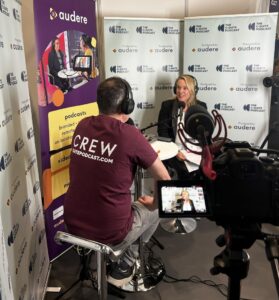
Finally, Graham is joined by Calypso Harland, CEO and Founder of Fintech Fringe. Calypso explains that Fintech Fringe was created to support the growth journey of fintech firms, helping them access expertise in compliance, marketing, fundraising and operations. The community runs events, a digital platform described as a LinkedIn for fintech, and a consultancy service called Scale&Grow. She has also recently opened a new members club in Farringdon for the fintech community.
Calypso has been hosting the Start Up Launchpad at Fintech Connect and highlights several standout companies. These include AstroFinance, which tokenises aerospace assets and has begun tokenising remote workspaces, Serene, which creates inclusive financial products for vulnerable customers, and Adclear, a tool designed to ensure compliance ready marketing for regulated fintechs.
Reflecting on ten years of fintech, Calypso points to the shift from disruption to collaboration. She notes that traditional banks once viewed fintechs as threats, but now see them as essential partners for meeting customer expectations and driving growth. She believes that institutions which fail to collaborate risk being left behind.
Conclusion
This edition of the podcast captures a comprehensive view of the state of fintech in 2025. From regulatory reform and cross jurisdiction sandboxes to open banking, fraud innovation, customer centric design and the steady move from competition to collaboration, the guests collectively paint a picture of an industry that is maturing while still evolving rapidly. As each contributor reflects on the past decade and peers into the future, one theme stands out: fintech will continue to reshape global financial services, powered by innovation, partnership and a growing focus on real world impact.